°1967
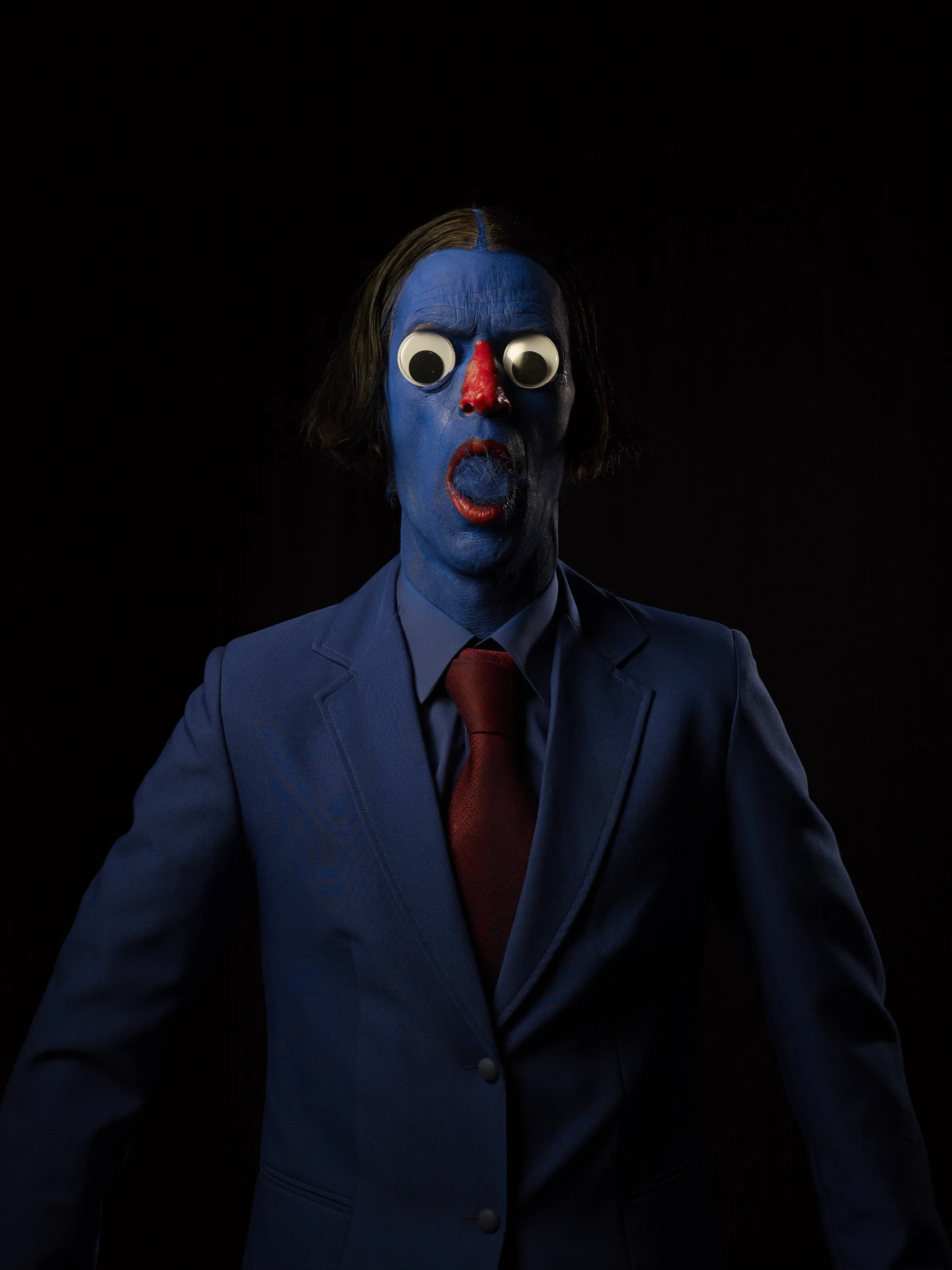
In the shadow of Messieurs Delmotte lies the author, a lair that allows him to put even more distance between himself, his practice and an institutional perimeter. The Messieurs, then, engage in substitution: “re-creation” that the mind is already familiar with, like the many banal images they have already transfigured. This is not a self-portrait, still less a transposition of the designer into one or more fictitious characters. Rather, it’s about a dissolute artist’s identity, a kind of rejection, an absence of subject. When we consider a video installation, a Thé Dansant or any of Messrs. Delmotte’s other performances, we’re already participating in them willy-nilly. The mind overtakes the body, making connections and gathering clues before we’ve even had a chance to examine the evidence. Between reality and fiction, perhaps one is in the other, perhaps it’s all one and the same thing, shattered into a multitude of fragments, scattered until they disappear. There’s an extremely fine line between the provoked scenario and the actual performance. What would happen if you walked into your neighbor’s house without permission, kissed him on the mouth and ended up doing it for real? The author of Messieurs Delmotte himself sees his entrainment not as an art form, but as a simple, idiosyncratic activity. Footage from the video Des Pigeons dans ma Veste (Pigeons in my Jacket) shows Messieurs Delmotte opening and closing his jacket to let someone in. he pigeons taking to the wing is not a performance, let alone a good idea, but simply doing what the protagonist wanted to do.
A Neighbor